Thursday, February 5, 2015

Wang Kelian, Gua Kelam and Padang Besar.

My parents and I went for a shopping trip to Wang Kelian, a border town near Thailand in Perlis during the Thaipusam holiday. It is one of the northernmost towns in Malaysia located behind the limestone mountains. This place is well-known for its local weekend market which is located on both sides of the border where traders from Southern Thailand would come to sell their goods to tourists. On the Malaysian side is Wang Kelian, while on the Thai side is Wang Prachan, Satun Province, Thailand. What is unique about Wang Kelian is visitors can cross the border freely without having to show their passports or border pass. Most of the goods sold here, namely clothes, food, snacks, toys, are mainly cater for the lower end market and they are of similar standard as those you would find in any other border towns like Bukit Kayu Hitam and Padang Besar. Below are the photos of the market at the Thai side of Wang Kelian after we passed the border. 


Perlis is the northernmost state, and a mainly a rural state in Malaysia. Although seems to be lagging behind in terms of development due to the fact that the state is rather sparsely populated, Perlis is home to many natural wonders. Limestone mountains straddling the vast paddy fields are unique to the state and it is one of the hidden gems of the state. Among these limestone mountains are caves and Gua Kelam is the most famous one. On the way to Wang Kelian via the Changlun-Kuala Perlis Highway is Chuping, which is home to the largest sugar cane plantations in Malaysia. 

Most of the areas are pretty much 'ulu' (rural) and to our surprise, there were hardly any petrol stations and it was a tough time finding it until we reach Wang Kelian. Even food was a problem as it was a problem for us to find restaurants and food stalls for lunch. Most of the shops in Wang Kelian and Kaki Bukit were closed for business. We managed to find a Chinese coffee shop in Kaki Bukit that serves all kinds of paus which we had for lunch. 

After lunch we proceeded to Gua Kelam, a popular tourist attraction in Perlis which is located in Kaki Bukit, at the foothills of the Nakawan mountain range. This cave is actually a 370m long mining tunnel which is part of the limestone cave system which enabled the British to transport tin ore from the valley. The entrance fee is RM1.00 for adult and RM0.50 for children. The cave has two openings which lead from the main entrance in Kaki Bukit to the secret garden at the valley hidden on the other side of the mountain. There was another cave which is only accessible via a trolley train but unfortunately it was no longer operational. There was a reception area but there were no staff manning the counter. 


Inside the cave was a stream flowing under the timber walkway which was generally well-kept. These were supported by horizontal beams. 


At the secret garden there were lakes, small streams, bridges and gazebos. There was a observation tower that look out to the secret garden. A stone's throw away there was a deer park but unfortunately there weren't any deers around. 


We continued our trip to Padang Besar, another border town in Perlis which leads to Sadao, Songkhla Province, Thailand before we headed home. There was a huge bazaar selling mainly clothing and bite-sized snacks. This is the location of the main road and rail crossing between Malaysia and Thailand besides Bukit Kayu Hitam. 


Wednesday, January 21, 2015

Suling Hill

Suling Hill is a private hilltop retreat near Mengkuang Dam, Bukit Mertajam. Although this place is a privately owned property, it is open to the public to enjoy the facilities and benefits the hill has to offer. The hill includes a observatory platform, reading room, conference room, bathroom, chalets and a durian orchard. The hill offers a breathtaking view of Mengkuang Dam, Butterworth-Kulim Expressway, Kampung Mengkuang, Sungai Lembu and Bukit Mertajam Hill. The hill commands a picturesque and enthralling view of the natural landscape as far as the paddy fields in Permatang Pauh and the sunset. Among the activities that you can do here include camping, mountain biking, picnicking, hiking and savouring local fruits. This rural retreat is still largely unknown to many urban dwellers. Suling Hill offers a wide variety of local fruits such as durian, rambutan, nutmeg, mango and mangosteeen which are cultivated on this hill. 

If you are travelling from Bukit Mertajam, the hill can be reached through Jalan Berapit towards Mengkung Dam. The moment you reach the traffic lights at the end of Jalan Berapit, turn right and shortly after that, turn left into a small, narrow road which bears the Suling Hill signboard, follow the signboard up the steep slope until you reach the summit. 


If you are travelling from Butterworth and Penang Island, take the Butterworth-Kulim Expressway until you exit at the EXIT1505 Tasik Mengkuang interchange which bears the signboard that leads to Penanti and Berapit. When you reach the traffic lights, turn right. After 1.3km you will reach a small, narrow road on the left just before the Kampung Mengkuang traffic light junction. You will see a signboard that leads to Suling Hill. If you have a smartphone, you can use Waze, a navigation app which can lead you to the place. 


Nandaka Vihara

Nandaka Vihara is a Theravada Buddhist vihara (monastery) located at the foothills of Bukit Mertajam Hill in Cherok Tokun, Bukit Mertajam, Penang. Very much unknown even to the locals, it is established primarily for practice of mediation. The monastery features a dana hall, meditation hall, monk's residence, gazebo for meditation and a liberation pond. You could see the monstrous Bukit Mertajam hill looming over the monastery a washed by durian orchards. 

The Buddhist monastery can be reached through Jalan Kolam, which is a road that leads to Hutan Lipur Bukit Mertajam (Bukit Mertajam Forest Reserve). Just before you reach the forest reserve, there is a small, narrow road that branches to the right next to a Chinese temple. 


The moment you reach Nandaka Vihara, you would be greeted by durian trees which surround the monastery. Beside the car park there is a small shrine and a dana hall which is in the main building of the monastery. 


Next opposite the main building there are several meditation pavilions dotting along a small path which also leads to a small bridge over a liberation pond. The open air pavilion augurs well with the local tropical climate, the work of nature high above in the hills provide cooling, hence there is no need for any air conditioning. 


Also beside the main building there is a pathway which leads uphill to other meditation pavilions. The pathway begins at a gateway with a landscaped garden. There is a bodhi tree on the left side of the gateway. 


The meditation pavilions on the hill slope are accessible through a ramp by motorcycle and staircases. On the way up the hill, you can see a panoramic view of Cherok Tokun and Bukit Mertajam Hill, as you can see in the photos below. The pathway ends at Ehipassika Sima Hall, which is a large meditation hall. 


Just as you would think it's a paradise rainforest resort, wait until you start living here. In actual fact, people come here to seek hardship. This reflects the harsh reality of life and suffering as part of the First Noble Truth. 

An ideal place for people who want to seek compassion and wisdom.

Tuesday, January 13, 2015

Penang Hill

Recently I went up to Penang Hill with my parents on New Year's Day. It only took 5 minutes to get to the hilltop with the newly upgraded funicular railway service as compared to the previous rolling stock which was much slower. Aside from that, visitors no longer need to switch trains at the Middle Station to get to the Top Station from the Bottom Station. Penang Hill has since improved with many additional attractions and facilities upgraded, including a food court, Astaka Bukit Bendera and an Owl Museum. Currently more viewing platforms are being constructed next to the funicular railway station. What is most exhilarating is the breathtaking view of George Town and the rest of Penang Island from the top of the hill. 

 Going up Penang Hill via funicular railway 
 Reaching the hilltop funicular station 
 View from the hilltop 
  View from the hilltop 
  View from the hilltop 
  View from the hilltop 
  View from the hilltop 
  View from the hilltop 
  View from the hilltop 
 Lily pond at David Brown's Cottage at Strawberry Hill, Penang Hill
 David Brown's Cottage at Strawberry Hill, Penang Hill

Kuala Sepetang Mangrove Forest

 It's relaxing to stroll around Matang Mangrove Forest Reserve in Kuala Sepetang (Port Weld), a sleepy coastal fishing town which is home to the first railway line in Malaysia linking Port Weld and Taiping. Hutan Paya Laut Matang (Matang Mangrove Forest Reserve) is the largest mangrove forest reserve in Malaysia. This forest is also a stop-over location for migratory birds during the harsh winter.


Cherry-picking at Bacchus Marsh

I had a fun time cherry-picking at the Naturipe Fruits in Bacchus Marsh, Victoria, Australia in November 2014. This is my second trip to the fruit farm a year later after Rayner's Stonefruit Farm. 

My friend, Wei Yuet and I took a V-Line train from Melbourne to Bacchus Marsh. Initially, we planned to walk from the railway station to the fruit orchard until we had found out that it was located about 5km from the railway station. Fortunately for us, it was the cherry and strawberry festival which was held during that particular weekend at Bacchus Marsh so there were free shuttle bus services from the Bacchus Marsh station to the various fruit orchards around the area. 


Naturipe Fruits was among the first stops from the railway station. Among all the fruit orchards around Bacchus Marsh, Naturipe Fruits was the most attractive to visitors because it was the most popular and had the most variety of fruits. As we arrived there, we felt excited to see lines of visitors waiting to enter the fruit orchard. 


Strawberries and Cherries were currently in season during that period of time. Those who wish to pick cherries were required to pay an entrance fee of $4. 

The cherry tress at the orchard which were available for visitors to pick. To maintain a consistent harvest of cherries, only a section of the cherry orchard were open to visitors.   

 Bountiful harvest at the cherry orchard 

 Cherries galore

Another closer look at the cherries

Our very own hand-picked cherries. 

Cherries at the fruit orchard

 Strawberry orchard at Naturipe Fruits.

Our hand-picked strawberries

After fruit picking, we took the free bus shuttle to Bacchus Marsh town where we had our rather late lunch. Baby Black Espresso Bar had a high rating of 92% on www.urbanspoon.com

 Salami and pesto bagel served at the Baby Black Espresso Bar

 Hot bacon roll 

 Main street at Bacchus Marsh 

 Main street at Bacchus Marsh 

After we reached the Bacchus Marsh Railway Station, we decided to took the V-Line train to Ballarat where we had dinner at Golden City Hotel before we headed back to Melbourne. 

 Heritage style Bacchus Marsh Railway Station


Ballarat Town Hall

 Spaghetti bolognaise for dinner at the Golden City Hotel

 Fish of the Day

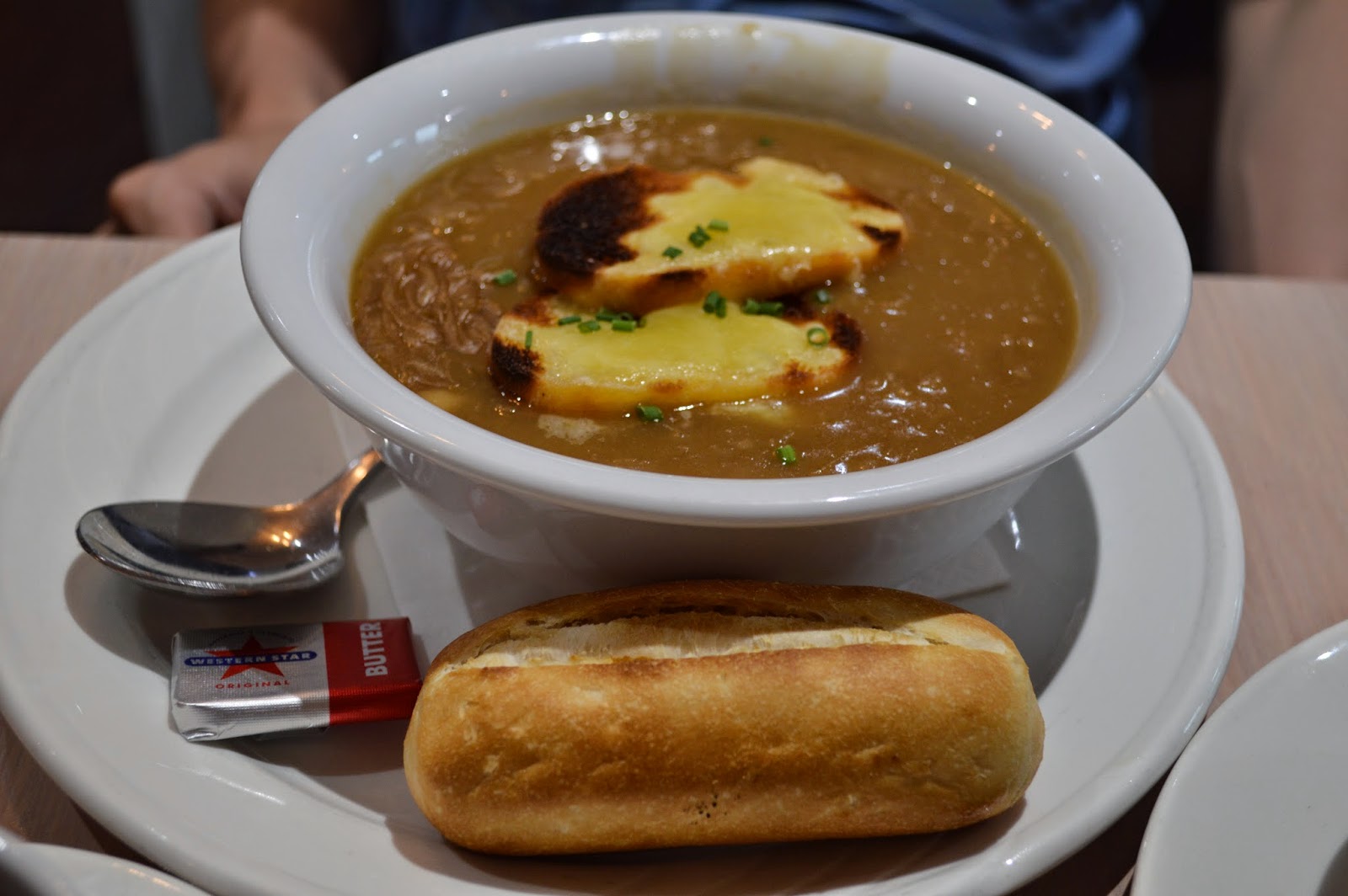
 Soup with hot roll

 Ballarat night scene 

Ballarat Railway Station