Tuesday, January 13, 2015

Kuala Sepetang Mangrove Forest

 It's relaxing to stroll around Matang Mangrove Forest Reserve in Kuala Sepetang (Port Weld), a sleepy coastal fishing town which is home to the first railway line in Malaysia linking Port Weld and Taiping. Hutan Paya Laut Matang (Matang Mangrove Forest Reserve) is the largest mangrove forest reserve in Malaysia. This forest is also a stop-over location for migratory birds during the harsh winter.


Cherry-picking at Bacchus Marsh

I had a fun time cherry-picking at the Naturipe Fruits in Bacchus Marsh, Victoria, Australia in November 2014. This is my second trip to the fruit farm a year later after Rayner's Stonefruit Farm. 

My friend, Wei Yuet and I took a V-Line train from Melbourne to Bacchus Marsh. Initially, we planned to walk from the railway station to the fruit orchard until we had found out that it was located about 5km from the railway station. Fortunately for us, it was the cherry and strawberry festival which was held during that particular weekend at Bacchus Marsh so there were free shuttle bus services from the Bacchus Marsh station to the various fruit orchards around the area. 


Naturipe Fruits was among the first stops from the railway station. Among all the fruit orchards around Bacchus Marsh, Naturipe Fruits was the most attractive to visitors because it was the most popular and had the most variety of fruits. As we arrived there, we felt excited to see lines of visitors waiting to enter the fruit orchard. 


Strawberries and Cherries were currently in season during that period of time. Those who wish to pick cherries were required to pay an entrance fee of $4. 

The cherry tress at the orchard which were available for visitors to pick. To maintain a consistent harvest of cherries, only a section of the cherry orchard were open to visitors.   

 Bountiful harvest at the cherry orchard 

 Cherries galore

Another closer look at the cherries

Our very own hand-picked cherries. 

Cherries at the fruit orchard

 Strawberry orchard at Naturipe Fruits.

Our hand-picked strawberries

After fruit picking, we took the free bus shuttle to Bacchus Marsh town where we had our rather late lunch. Baby Black Espresso Bar had a high rating of 92% on www.urbanspoon.com

 Salami and pesto bagel served at the Baby Black Espresso Bar

 Hot bacon roll 

 Main street at Bacchus Marsh 

 Main street at Bacchus Marsh 

After we reached the Bacchus Marsh Railway Station, we decided to took the V-Line train to Ballarat where we had dinner at Golden City Hotel before we headed back to Melbourne. 

 Heritage style Bacchus Marsh Railway Station


Ballarat Town Hall

 Spaghetti bolognaise for dinner at the Golden City Hotel

 Fish of the Day

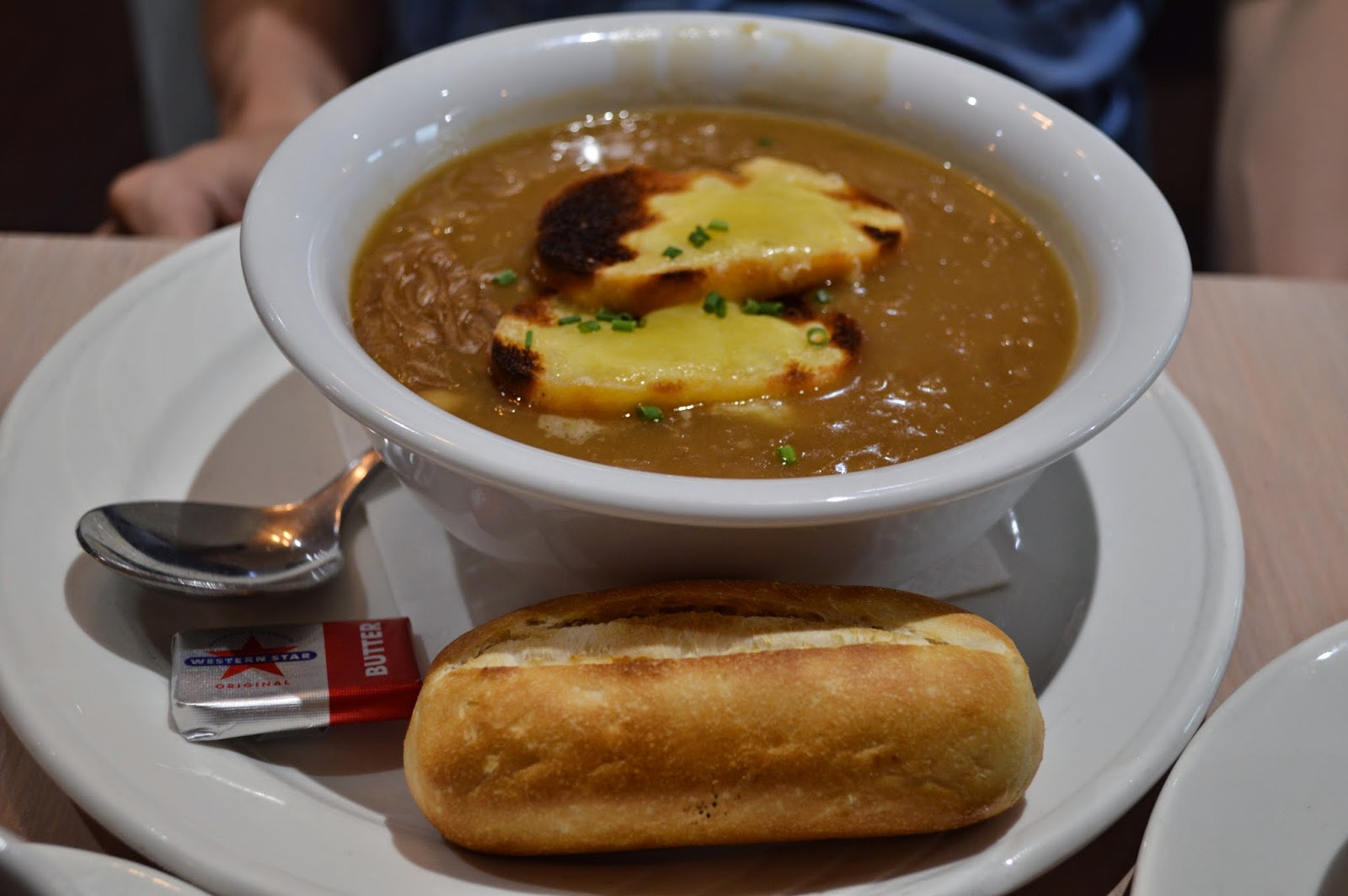
 Soup with hot roll

 Ballarat night scene 

Ballarat Railway Station


Trip to Rayner Stonefruit Farm

I had a drive to Rayner's Stonefruit Farm located in a small town of Woori Yallock, Yarra Valley, Victoria, Australia with my friends, Samuel, Quek Ying, Thong and Wei Tong during the summer season in 2013. There are 350 varieties of fruits cultivated in the fruit orchard including peaches, nectarines, plums, apricots and even some cross bred varieties. The fruit orchard is a 30 minute drive from Melbourne. 

 Peach tree at the orchard 

 The tractor that took us around the orchard 

 Peaches 

 More peaches 

 Yellow peaches 

 Afternoon at the orchard 

 Plumcot, a cross breed between a plum and an apricot

 Doughnut peaches a.k.a Saturn peaches

 Lemon

 Apricots grown at the orchard

Group photo at the Peach Cafe 


You can check out their website at: https://www.raynerstonefruit.com.au/ 

Tuesday, July 8, 2014

Problems Faced by Contemporary Malaysian Cities

Introduction
Gone were the days when everybody in the kampungs knows each other, different races live together in harmony, and they cooperate with one another in unison through activities such as ‘gotong-royong’. Nowadays children can no longer play freely in the streets, people can no longer feel safe while walking along the streets. High crime rate is a disturbing trend nowadays. Modern city life now became part and parcel of most Malaysians’ way of life, often conforms their social realm within the household. Property developers nowadays build new townships and housing schemes at the urban fringe of many major city conurbations. These developers often rake in profits by selling their residential units, disregarding any proper urban planning that may benefit the residents.


1.   No priority for pedestrians and cyclists
Among the aspects developers and planners should consider are to provide more space for pedestrian walkways and make it far away from busy streets. Many major streets and laneways in Malaysia do not provide ample space dedicated to pedestrians and bicycles. In many residential areas kerbs are used by residents as private gardens, while five-foot ways in shop lots are used to park motorcycles, furniture or displaying goods, so people frequently walk or jog along road shoulders. To make matters worse, cars were often parked at road shoulders, jeopardizing resident’s safety to vehicle accidents and snatch thefts. Even when there are pedestrian walkways that is narrow, often there is illegal parking of motorcycles which obstruct pedestrian movement. Instead, the authorities should encourage developer to plant more trees so as to provide shade to walkways.  This in turn will reduce the reliance on cars and motorcycles for travelling to nearby destinations, thus inculcate healthy lifestyle and increased chance of social interaction among neighbours.

2.    Lack of civic centres
Aside from that, urban planners should accentuate mixed use of development while planning new townships. As a resident of a new residential area, I have to drive my car as far as 10-minute journey for running errands such as grocery shopping, dining-out and banking, therefore it is inconvenient for residents like me to walk or cycle. Shops, commercial centres, public buildings and transportation hubs developed within a 2km radius and within walking distance are laudable.

3.   Lack of public spaces
Many contemporary cities in Malaysia has lack of public open space. Developers and urban planners should create more public space for recreation, games, communal activities, festive gatherings and flea markets. These will not only ameliorate robustness of the neighbourhood, but also encourage more productive and beneficial activities, and in turn instill family values, building camaraderie and sense of comfort in the neighbourhood community as in traditional kampongs. Various recreational activities and community centres may deter the young from indulging in social ills such as illegal racing. Besides that, public spaces would also provide a more safe and secure realm for the residents, especially for children who would use it as a play space.

4.   Inefficient public transportation
In addition, townships should be built along major transportation corridors to ensure residents have easy access to public transport. Major landmarks such as shopping centre and public parks, and key districts should be planned in close proximity to the public transportation hubs. In many new residential areas much is focused on travelling by private vehicles, mainly cars and motorcycles. It is suggested that towns may have a dedicated bus lane or bicycle lane to reduce reliance on private transport. In that way, traffic congestion and environmental pollution is alleviated.

A public park may be developed at the centre of a residential area with people conducting business by setting up warungs, mamak stalls or hawker stalls. This is because these hawkers tend to occupy parking space which lead to double parking by vehicles, which in turn cause traffic congestion. Maximizing functions of public space may increase liveability of the neighbourhood. Cities should provide ample open space for hawkers selling food. In that way, this would become a popular public space for residents to converge. Food streets should be celebrated as one of the key elements of Malaysian culture.

5.    Insufficient variety
Building arrangements should have a distinctive layout and variety, rather than continuous street layouts parallel to one another as in many typical terrace housing. Developers and planners should also promote mixed use of space in these new urban areas, instead of vast specific zoning of residential areas. An urban area should have different types of buildings to provide visual cues and create a sense of meaning to the place. This would also increase legibility for people to locate places.

6.    Lack of local character and cultural richness
Planners of contemporary cities should not discard the good qualities of a local kampongs and old towns. These kampungs consists of fine grains of intense social activities that enlivens the city. Many modern Malaysian cities today are looking more like Western cities and their distinctive urban characteristics are diminishing. This is due to increasing globalization that seems to be more economically expedient in Malaysia, but this is however a major threat to the maintenance to the urban cultural heritage. 

Modern buildings that may be suitable for cold climates may not be suitable for Malaysia which has a tropical climate. These cities have isolated glass skyscrapers that are unsustainable and out of local context. In some traditional heritage buildings and kampong houses, they are built to adapt with the local tropical climate.   

These contemporary cities should have a certain human scale. Putrajaya and Cyberjaya may have been planned with wide boulevards, monumental plazas and governmental institutions are mainly for vehicles with disregard to human scale. The buildings are located too far apart to accommodate wide streets and this makes people feel uncomfortable while walking through the streets in the scorching afternoon. The buildings in these newly planned cities should be designed with different architectural styles, i.e. Malay, Chinese, Indian etc. to reflect the multiculturalism in Malaysia.

Conclusion
I vehemently believe that developers, planners and authorities should not be nonchalant in solving the prevalent issues in our cities and considering the needs and future of the local community to achieve the objective of a city with a clear vision. 

Saturday, July 5, 2014

Focus on Urban Growth in Penang

Originally published in the The Star newspaper on January 6, 2011: http://www.thestar.com.my/story.aspx/?file=%2f2011%2f1%2f6%2ffocus%2f7741164&sec=focus 

Malaysia is currently a developing nation. Infrastructural development is required to cope with the ever increasing population. It does not take a genius to predict that Malaysia has to develop to achieve a developed nation status. Particularly in Penang, development is crucial as it needs to vie with different parts of the region to become a top tourist destination.

As a Penangite, I certainly feel that Penang certainly needs an alternative mode of development to cope with prevalent problems that lead to environmental issues such as traffic congestion and flash floods.

Rapid development does not necessarily hinders protection of environment. One should not stereotype building construction and development as means of destruction of the pristine natural landscape of Penang Island.

Residents of Penang are void of living standards of a developed urban living such as efficient public transportation. Penangites are currently more car-dependent as there is no high-capacity mass rapid transportation system unlike Kuala Lumpur, Putrajaya, Malacca and any other mega cities of the world. Proposals of constructing a monorail train system in Penang were recently scrapped due to political and economical reasons.

Without proper urban planning, housing development would become decentralized. With increased usage of private transportation, decreased efficiency of the city due to traffic congestion may occur and more pollution, which in turn increased consumption of energy and emission of greenhouse gases.

While preserving its natural landscape, the Penang Government should develop the urban conurbation by implementing key development zones by phases to control from extension into the urban fringe. This includes identifying, managing and preserving heritage zones and ecological zones.

Development should comprise balancing population growth between Penang Island and Seberang Perai. Residents moving from Penang Island to Seberang Perai should be encouraged to reduce congestion.

Increase green lungs and parks in inner urban areas to reduce fragmentation; in other words, prevent isolation of habitat of flora and fauna.
Increase population density by introducing transportation corridors, whereby development concentrates along these corridors to have easy access to public transport.

Proper management concerning urban development by co-operation between Penang state government, Penang Municipal Council, Seberang Perai Municipal Council, NGOs and citizens would achieve higher standards of living, public transport accessibility, housing affordability and environmental sustainability.

I reiterate that development does not really inhibit environmental sustainability. The ban of plastic bags is a lauded move by Penang Chief Minister Lim Guan Eng as a first step towards a cleaner and greener Penang. 

Bukit Mertajam


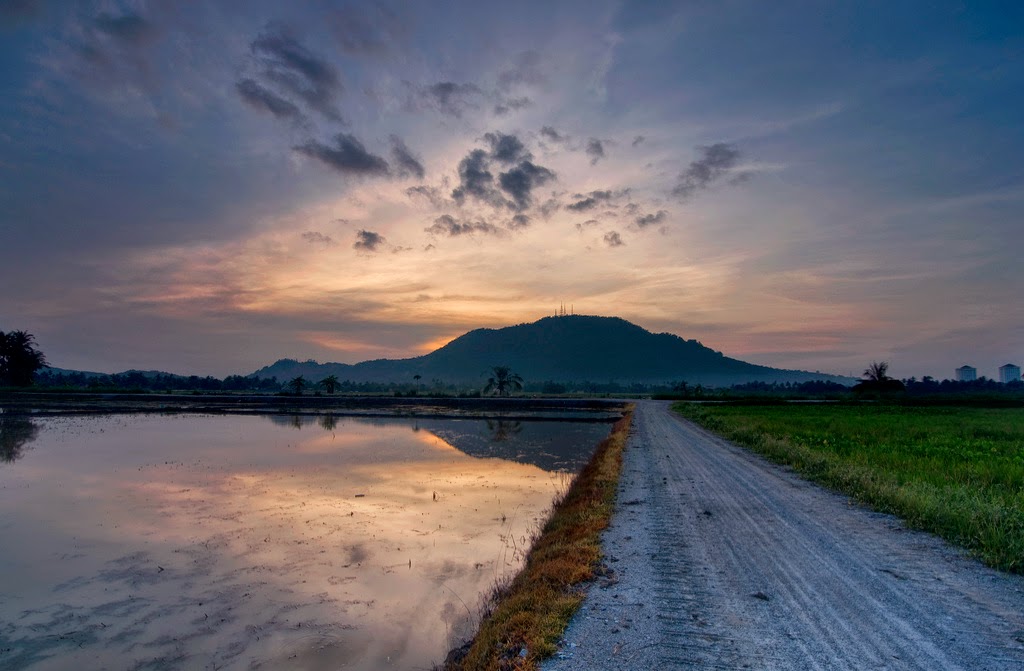
View of Bukit Mertajam Hill from a paddy field in Permatang Pauh

I had always been living in Bukit Mertajam until my family moved to Simpang Ampat when I was at the age of thirteen. Located in Seberang Perai in the state of Penang, Bukit Mertajam has always been a quaint little town that has its old world charm. It is a hidden gem that keeps drawing me back. The town has always been a part and parcel of my childhood days and it exudes my sense of home and belonging. Even though I no longer live there, I sensed that I have a personal connection with it.

What you may have not known is that this town produces many national personalities such as national badminton player Lee Chong Wei and former Prime Minister Tun Abdullah Ahmad Badawi. Datuk Seri Anwar Ibrahim was also born here.


Front courtyard of the Tua Pek Kong Temple in Jalan Pasar, Bukit Mertajam

The main feature of the town is a monstrous hill that gave the town its name, looming over the town below. Bukit Mertajam is a thriving town with bustling of business and trade. Lining the streets are quaint shops and small stalls selling groceries and local items. A Tua Pek Kong Temple lies in the heart of the town in which its temple courtyard becomes a public open space and cultural centre of the town. This temple is built to serve as a local guardian deity to the local community. Surrounding the temple there are roadside stalls selling popular hawker fare and tasty snacks. This temple is also a venue for many Chinese opera and musical shows where residents from all walks of life converge to enjoy the performance. Sundry shops, coffee shops, markets, bazaars, supermarkets and other enterprises surround the temple. Shops along the market street and the nearby railway station is the place where most of the business activities comes in full swing, especially in the morning. Bukit Mertajam Supermarket used to be located above the town’s market.

A few miles away out in the country side there are farmhouses where vegetables are cultivated. Nearby there are fruit orchards and paddy fields which is the town’s main agricultural produce.

This town is also never too far away from nature sites. A stone’s throw away from the hustle and bustle of the town is the Bukit Mertajam Recrational Forest, which transports me to greenery and serenity. The nature reserve’s lush vegetation is one of the hidden gem. Here, I visit the teahouses where I can enjoy various types of Chinese tea as well as herbal eggs, strolling under the rainforest canopy, hike up the hill via a forest track, or take a dip at the cascading streams.  At the summit of the hill, a scenic view of the town below and Penang Island in which I find it to be rewarding.

Perched on a hill slope there is a Buddhist monastery. Its pavilions, meditation huts and monks dwellings offer a scenic view of the hills and the town below, not to mention being surrounded by durian orchards. Its built environment augurs well with the local tropical climate, the work of nature high above in the hills provide cooling. It is an ideal place for those who want to seek compassion and wisdom.

In the valley below lies St. Anne’s Church which is home to the largest Catholic pilgrimage in the country. Another highlight of this church is the life-sized figures at Stations of the Cross. I would hike up to the nearby hillock next to the church where the grottoes are located.

Bukit Mertajam is a home to a melting pot of cultures, it is the centre of cultural exchange, not to mention the wide array of food and festivals you get to indulge in. Roadside stalls selling Hokkien Mee, Char Koay Teow, Yam Rice, Jawa Mee, Laksa, Koay Teow Soup, Mee Goreng Loh Shee Fun and Wanton Mee which are the popular hawker fare here. This town is also home to old school style Teochew cuisine. Different types of festivals are celebrate here, namely Chinese New Year, Wesak Day, St. Anne’s Feast and Hungry Ghost Festival.

I vividly remembered playing football with my friends from my neighbourhood by the river during my childhood days. Whenever there was a heavy downpour, the river burst its banks, causing the area to be flooded. My house was often inundated by foot-deep flood waters during the monsoon season, which compelled my family to move out of the town. Each time during the monsoon season my sisters and I would tuck up in the sitting room upstairs watching movies while eating instant noodles.


I also vividly remembered two secondary schools in Bukit Mertajam where I used to study, namely SMK Berapit and Bukit Mertajam High School. SMK Berapit is the alma mater of Datuk Lee Chong Wei while Bukit Mertajam High School is the alma mater of Tun Abdullah Ahmad Badawi. Bukit Mertajam High School sits on a hillock and there is a large school field which is known as Jacobs Green. Behind the school is a bungalow owned by a man who was once the richest man in the town by the name of Teh Cheok Sah. Behind the bungalow there is another hillock filled with lush vegetation where residents of the town go there for fitness and recreation. There used to be a community library atop the hill. 

These fun experiences and rich tapestry of lifestyle in this town has been deeply etched in my memories. 

Tuesday, June 19, 2012

History of Bukit Mertajam

Briefly translated and modified from source: 王琛发 (2008), 大山脚历史,Zoom Penang. URL: http://zoompg.com.my/forum.php?mod=viewthread&tid=32, retrieved 19 June 2012. 


Brief History
Bukit Mertajam is town in the Malaysian state of Penang, located in Central Seberang Perai, with the Chinese community forming the majority of the total population. Jit Sin High School is one of the top performing schools in Malaysia. The town is also famed for the St. Anne’s Catholic Church, with its annual St. Anne’s Novena and Feast being held every year at the end of July which attracts thousands of devotees from all around the country.
As a major town in Central Seberang Perai, Bukit Mertajam serves as one of the many economic hubs in the northern region.

Hundred years ago, Bukit Mertajam is merely a barren wasteland filled with wild animals and swampy marshlands infested with crocodiles.
Although so far there is no complete written record on the early settlement of Bukit Mertajam, archeologists had recently discovered much evidence on the antiquity of the town.

According to archeological findings, there has been early settlement of Bukit Mertajam some 1500 years ago in the 5th century based on the discovery of the Cherok Tokun Relics, which is a stone tablet carved with ancient Sanskrit writings, which is now displayed in the church grounds of the St. Anne’s Church along Kulim Road.

Based on the early Chinese settlers of Bukit Mertajam, the urban planning of the old section of the town was established in 1886 by the Hock Teik Cheng Sin temple community, with the Pek Kong Temple as a town core while the shops, markets and bazaars radiating around the temple.

The Hock Teik Cheng Sin Temple along Pasar Road not only serves as a centre for Chinese folk religious worship, but also functions as an administrative body for the Chinese community, which consists of four clan associations. At that time, the temple community is responsible for the economic and social welfare of the Chinese community including schools, graveyards, events, social activities, and properties.

The Chinese community in Bukit Mertajam is mostly from the Teochew clan. They hail mostly from Huizhou, Guangdong, China and speaks the Teochew dialect. The Teochews once made up nearly half of the total population in Seberang Perai.

Antiquity
In the Malay archipelago during the 1st and 6th century is known as the Indian cultural era in which Malay kingdoms at that time embraced Hinduism. Evidence arising from the discovery of the Cheork Tokun Relics has shown that the early settlers of Bukit Mertajam have Hindu influence.

The Indians have long discovered the Malay Peninsula. In Indian literature which is known as the Ramayana text, they had referred to the Malay Peninsula as Suvarnabhumi (Land of Gold). During the 3rd century AD, the Indians begin to trade in the Malay Archipelago regions. These traders are mainly from the Southern Indian kingdom of Chola and Pallava. Soon the Kedah plain has large influences of Hinduism and Buddhism with the construction of many temples and candis. Kedah kingdom had been the trading hub and centre of Hindu civilization in the Malay Archipelago region. Paddy is mainly cultivated in Bukit Mertajam during that period.

The region of Bukit Mertajam is followed by Thai influence during the 18th century. During this era, Bukit Mertajam existed as a quaint Malay village which is based on paddy cultivation. However, these villagers were either persecuted by the Siamese or had fled.

Early Discovery
According to the Huizhou clan association, the town’s history can be traced back to 1822 when the immigrants from Huizhou begin to settle in Penang, involving in farming. Agriculture was once a major industry in Penang.
When Sir Francis Light discovered Penang in 1786, Penang has become a centre for spice trade in the East Indies to supply the European market. Then there was a ten-year conflict between the Dutch and the British in South-east Asia. In order to dominate the spice trade and prevent from further and supply disruptions, the British has started the cultivation of spice in British colonial settlements like Province Wellesley.

Major Forbes Ross MacDonald was the superintendent of Prince of Wales Island (Penang Island) in 1799. In his report, he brought in the Huizhou people and assisted them by providing transportation to travel to Penang from their homeland, land for cultivation, housing and social welfare. This has opened up the floodgates for more Chinese to venture into farming in Province Wellesley. At that time, many people in the Huizhou region in China suffered from famine, drought and violence due to land disputes. People from Huizhou came to Penang to look for greener pastures.

In June 1800, the Huizhou people began to settle within the vicinity of the present day Bukit Mertajam. Earlier in that year, the first Lieutenant-Governor of Prince of Wales Island, Sir George Alexander William Leith, had negotiated a further treaty with the Sultan of Kedah for the cession for a strip of land in Kedah in the mainland which is later known as Province Wellesley. Province Wellesley is named after Richard Wellesley, the Governor-General of India.
Before East India Company gained control of Province Wellesley, the Chinese had already begun their sugarcane plantation in Batu Kawan. In 1800, seeing the high demand of herbs and spices in Europe, the British had encouraged the residents of Bukit Mertajam to grow various spices such as pepper, cloves, cinnamon and nutmeg. Besides agriculture, the residents of Bukit Mertajam begin to engage in alternative income such as quarrying.

It is known that during the 19th century Bukit Mertajam is the largest producer of granite in the Northern region. At that time, the quarrying areas in the town are the areas surrounding St. Anne’s Church and Berapit. Granite was used to construct the Penang prison in the island. They were transported by ferrying the rocks across the sea. Huizhou people had been dominating the granite quarrying industry until the Second World War.

During the 1930’s the Chinese began mass plantation of sugarcane in Bukit Mertajam as a source of sucrose to be exported to England. Sugarcane plantations are concentrated in key areas in Bukit Mertajam surrounding the town area and Bukit Mertajam High School near the railway tracks.
The rivers and streams that flow from the Bukit Mertajam hill into the low plains are now replaced by the large urban drainage systems to cope with the large amount of storm water. Around the newly built temple which is constructed along the river bank, the Huizhou people first settled as farmers in hilly terrains, farming lands, as well as hills. The marketplace is established with hillocks surrounding the valley with the river flowing through the centre.

The region surrounding Bukit Mertajam during the spice trade era in the 19th century is only accessible by boat and junk. Sungai Juru and Sungai Rambai was the main transportation waterway in the town, with Sungai Rambai and Padang Lalang regions were the main harbour that served the town. There was no land transportation that connects the town, except mud roads that lead to Butterworth. Therefore, all trades and products such as spices and granites have to be transported through the river.

Early Development
Records have shown the demographics of Seberang Perai in 1861, which at that time has a total population of 64000. Ethnic breakdown is as follows: Europeans 76, Malays 56236, Chinese 7204, Indians 3515 and Siamese 186. Majority of Malays settle in the northern portion of Seberang Perai as fisherman and farmers, while the Bengalis involve in the livestock industry. Many Chinese conduct business in the town areas, especially in Bukit Mertajam.
In 1899, rubber plantation has replaced the sugarcane plantation. During that time, the railway system that connects Prai, Nibong Tebal and Bukit Mertajam has been completed. The railway track which connects Kuala Lumpur and Singapore has been completed in 1909, making railway as the main transportation system. In 1914, rubber is the main production in Bukit Mertajam.

With the rapid development and improvement of the transportation system, the population of the town increased dramatically. The first Malay vernacular school was set up in 1800 in Cherok Tokun. Another Malay school was opened in Sungai Rambai 3 years later. The first Chinese vernacular school, Jit Sin School, was opened in 3 March 1918. Jit Sin School was first established by the Hock Teik Cheng Sin Temple committee along Jalan Pasar. Hock Teik Cheng Sin had purchased 120,000 dollars worth of land for the building of the school. Bukit Mertajam High School was first opened in 1927, the Convent school was founded in 1931, while Kim Sen School was established in 1939.

The first motorcar in Bukit Mertajam was in 1920. By 1930, there are 15 private motorcars owned by the residents of Bukit Mertajam.

Development had been slow before the Second World War. In 18 December 1941, the Japanese troops attacked Pearl Harbour with Indochina as their military base. Japanese troops first landed in Kota Bharu, Songkhla and Pattani by sea in the same year and then travelled by land to conquer Malaya. 

On 17th December Japanese troops conquered Penang, and at the same time Bukit Mertajam was also affected. Before the British retreat in 1941 the railway station in Bukit Mertajam had been blown up. The railway station was constructed again in 1942 by the Japanese and uses Bukit Mertajam High School as a military base. At that time, Bukit Mertajam High School was forced to close down.

After the Second World War had ended in 1945, Bukit Mertajam had been a thriving town with bustling of business activities and trade. Development was rapid. Entertainment such as Cinemas and theatres and were opened between 1956 and 1957.

There is significant urbanisation of the town in 1957 which started as a village and later developed into a major urban area. Recent development is followed by establishment of new townships such as Taman Sri Rambai, Taman Kota Permai, Taman Desa Damai, Taman Alma, Taman Sentosa, Taman Bukit and Taman Tenang and Taman Mutiara.

The new hospital along Kulim Road was built in 1960; the new post office was built in 1968, while the new train station was built in 1983.
Today, Bukit Mertajam is one of the trading and economic hubs in the northern region in Peninsular Malaysia.